
Kansas City metro · John Beal Roofing since 1947
What Happens During a Roof Replacement, Start to Finish
What gets delivered, what gets torn off, what goes back on, and in what order. No surprises on the day.
Before the truck shows up
The work starts on paper. You should already have a written scope naming the shingle line and color, the underlayment, where ice-and-water membrane is going, which flashings are being replaced, the ventilation plan, and a per-sheet price for any decking that turns out to be bad. If any of that is missing before the job, it becomes a change order during it.
Permitting is ours to handle, and in this metro that means knowing which of a lot of separate jurisdictions your address falls in. We pull it, not you.
Two things help on your end. Move vehicles clear of the driveway, because material and a dump trailer need that space and shingles get delivered by a boom truck. And if you have anything fragile hanging on upstairs walls, take it down. Tear-off is a percussive job, and vibration travels through framing.
Morning: setup and tear-off
Crews typically start between seven and eight. The first half hour is protection, not roofing: tarps over landscaping and AC units, plywood against siding where debris will land, and the dump trailer positioned so material comes off the roof and into it directly rather than across your yard.
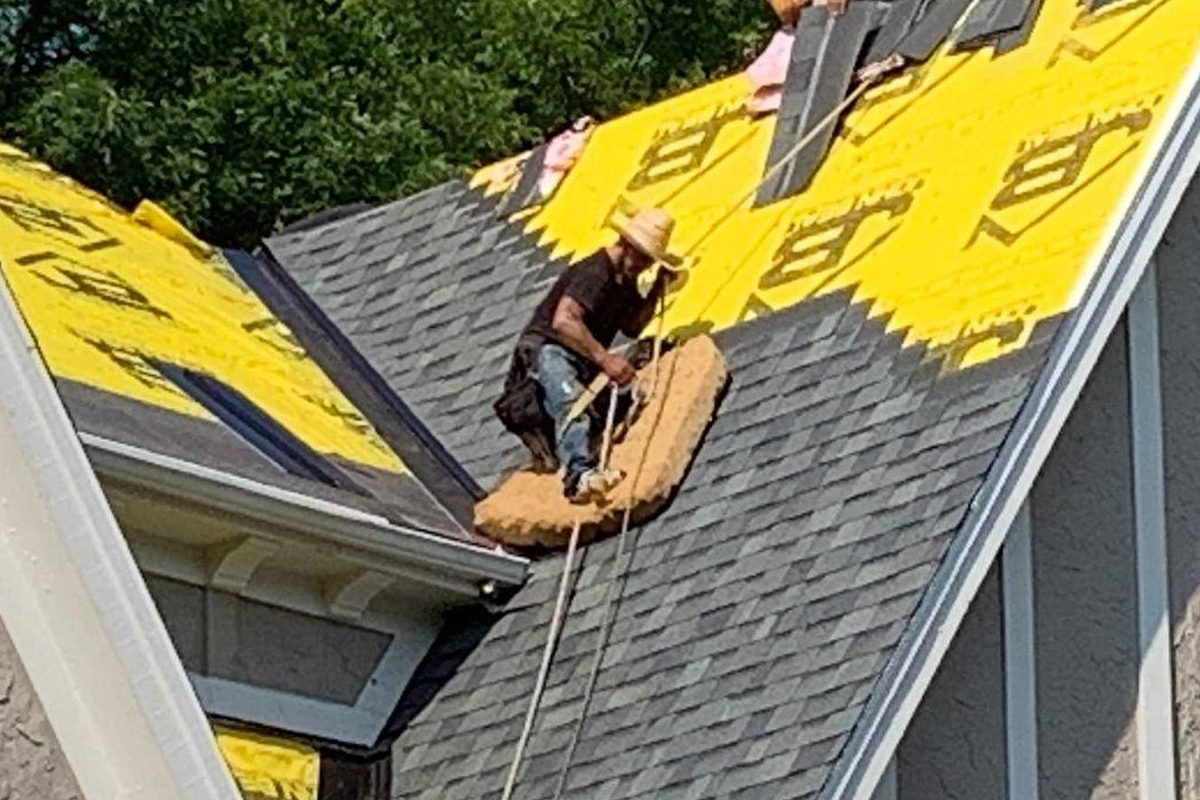
Then the old roof comes off, down to bare decking. Not partially, not over the top. That is the only point in the entire job when the real condition of the structure is visible, and it is the reason a full tear-off is worth paying for.
Tear-off is the loud part and the fast part. On an average house it is done before lunch. If you work from home, plan your calls around the morning rather than the afternoon.
Midday: decking, dry-in and flashing
With the deck exposed, the foreman walks it. Soft sheets, delaminated plywood, and old board decking with gaps too wide to hold a fastener get replaced, at the per-sheet number already in your scope. You will be shown what came out. On a newer house that is often nothing at all.
Then the roof gets dried in, and the order matters. Drip edge at the eaves, ice-and-water membrane along the eaves and up every valley, synthetic underlayment across the rest of the field, drip edge at the rakes over the underlayment. At this point the house is weather-tight even with no shingles on it.
Flashing goes in next and this is where roofs are won or lost. New pipe boots, new step flashing at every sidewall and dormer, new counterflashing cut into sound mortar at masonry chimneys, new valley metal. Reusing old flashing under new shingles is the most common invisible shortcut in this trade, and it is not what you are buying here.
Afternoon: field shingle, ridge and vents
The starter course goes on first, at the eave and up the rakes, and it does more for wind resistance than the shingle brand does. Then the field runs in courses up the slope, each one fastened to the count and placement the manufacturer specifies for the wind rating you are paying for.
Penetrations get cut and boots set as the courses reach them, rather than being worked around later. Hip and ridge caps are a separate product from field shingle, and a quote that does not name them separately is a quote that is guessing at your total.
Ventilation is the last thing installed on the roof and the first thing that determines how long it lasts. Ridge vent goes on with the cap, and if intake at the soffits is blocked or absent, that gets corrected as part of the job. Exhaust without intake does not move air, and we are not going to install half a system and call it done.
Cleanup, walkthrough and afterward
Cleanup is not sweeping. It is a rolling magnet over the drive, the walks, the lawn and the beds, more than once, plus hand-picking around landscaping where a magnet cannot reach. Nails in a driveway are the most common complaint in this industry and it is entirely avoidable.
Then a walkthrough. You see photographs of the decking that came out, the flashings that went in, and the finished slopes. If a jurisdiction inspects, that gets scheduled and we meet the inspector. Your paperwork should end up with the manufacturer's registration, the workmanship coverage in writing, and the final invoice matching the scope you signed.
Give it a hard rain and a hot afternoon before you decide the job is done in your mind. Sealant strips bond with heat, so a roof installed in cold weather sets more slowly. If something looks off in the first season, call the same number on your invoice: 816-572-9500, answered live, including at two in the morning during a storm.
Frequently asked
What time does the crew arrive and how much notice do I get?
Where does the old roof actually go?
Do I need to move anything inside the house?
Will a dump trailer damage my driveway?
What happens if it rains partway through the job?
Related Kansas City roofing pages
- Roof Replacement in Kansas City
- Shingle Replacement in Kansas City
- Free Roof Inspection in Kansas City
- Attic and Roof Ventilation in Kansas City
Areas we cover for this work
Roof Replacement Timeline
Free, no obligation, and we hand you the photographs either way.
Get a written roof replacement scope, not a number on a napkin
Free inspection, photographs you keep, and a line-by-line scope you can compare against any other bid in your stack.