
Kansas City metro · John Beal Roofing since 1947
Roof Replacement in Kansas City
A tear-off done right, flashing built new, ventilation balanced, and a written scope you can read before anyone starts.
Short answer
A full roof replacement in Kansas City means tearing the old covering down to the decking, replacing any decking that has failed, installing new underlayment and ice-and-water membrane at the eaves and valleys, building new flashing at every wall and penetration, installing the new shingle to the manufacturer's nailing pattern, and correcting the attic ventilation so the new roof lasts as long as it is rated to. Most single-family homes take one to two days. A written scope should list all of that line by line before you sign anything.
What a real tear-off includes
The words "roof replacement" cover a wide range of work, and the gap between the cheapest quote and the most expensive one in your stack is almost never about the shingle. It is about what is underneath and what gets replaced versus reused.
A complete tear-off takes the old roof down to bare decking. That matters because decking is the only place the real condition of a roof is visible. Water that has been getting in around a failed pipe boot for three years has been soaking the plywood the entire time, and no inspection from on top of the shingles will find it. Once the roof is open we can see it, and we replace what has gone soft.
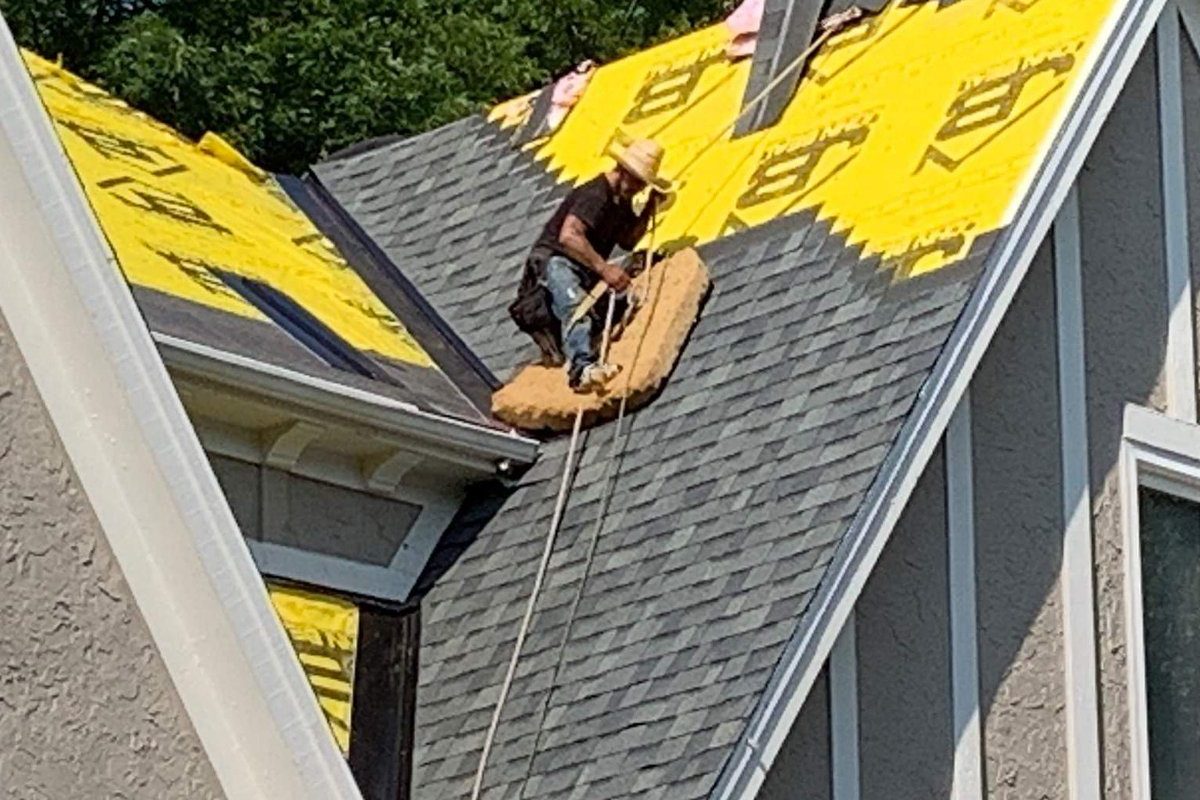
From there the assembly goes back together in a specific order: ice-and-water membrane along the eaves and in the valleys, synthetic underlayment across the field, new drip edge at the eaves and rakes, new starter course, then the field shingle installed with the fastener count and placement the manufacturer specifies. Skipping or economizing on any one of those layers produces a roof that looks identical on day one and behaves very differently in year eight.
Flashing is where roofs actually leak
Shingles shed water. Flashing is what keeps water out where the roof meets something else, and it is where the overwhelming majority of leaks originate. Chimneys, sidewalls, dormers, skylights, plumbing vents, exhaust terminations.
Reusing existing flashing on a new roof is the single most common corner cut in this trade, and it is invisible to a homeowner. The new shingles look perfect. Underneath, twenty-five-year-old step flashing has been slid back into place and sealed. It will hold for a while. It is not a new roof.
We price new pipe boots, new step flashing, new counterflashing and new valley metal as standard on a replacement, and where something genuinely can be retained we say so and explain why. On houses with masonry chimneys we also look at the condition of the mortar, because counterflashing has to be cut into a sound joint and there is nothing to cut into if the joints are failing.
Ventilation decides how long the new roof lasts
An attic needs to breathe, with intake low at the soffits and exhaust high at the ridge, and the two have to be balanced. When they are not, the attic runs extremely hot in a Kansas City July and holds moisture through the winter. Both of those shorten shingle life from underneath, where no warranty inspection is going to look.
The common failure we find across this metro is exhaust without intake: a ridge vent installed on a house whose soffit vents are painted over or packed solid with insulation. That configuration does not move air, and in some cases it pulls conditioned air out of the house instead.
We calculate the required net free vent area against your actual attic square footage and correct the balance as part of the replacement. It is not an upsell, it is the difference between a shingle reaching its rated life and falling several years short of it.
What your written scope should say
Before you sign with anyone, the estimate should tell you the shingle manufacturer, line and color; the underlayment type; where ice-and-water membrane is going; which flashings are being replaced versus reused; the ventilation plan; a stated per-sheet price for any decking that has to be replaced; who pulls the permit; and how debris and nails are handled at cleanup.
A one-line quote with a number on it is not a scope. It is also, in our experience, the leading cause of change orders, because everything that was not specified becomes an extra once the roof is open.
What drives roof replacement cost in Kansas City
Two houses with the same square footage can have very different roof prices. The factors that matter most are the size of the roof measured in squares, the pitch (steeper roofs need more safety setup and work more slowly), how many layers are being torn off, how much decking turns out to be rotted, how many valleys, chimneys and skylights need flashing, and which shingle line you choose.
That is why we measure the roof and look at it before we give you a number. A written estimate should list each of those items, so you can compare bids on what is actually included rather than on the total alone.
New roof installation, start to finish
Most residential replacements take a single day, with larger or steeper roofs running into a second. The crew protects landscaping and the driveway, tears the old roof down to the deck, replaces any soft decking, installs ice and water barrier at the eaves and valleys, lays underlayment, then new flashing, shingles, ventilation and ridge.
At the end of the day the yard is swept with magnets for nails and you get photos of the work, including the parts you will never see once the shingles are on. Our roof replacement timeline walks through each step.
Shingle choices and manufacturer credentials
John Beal Roofing is an Owens Corning Platinum Preferred contractor and a CertainTeed SELECT ShingleMaster. Those designations are earned through installation training and track record, and they let us register qualifying roofs for manufacturer system warranties, which cover the shingles and the matching components installed together as a system.
If you are trying to pick a color, our homeowners like to compare full-roof photos rather than small swatches. Ask and we will bring samples to the house.
Permits and the state line
Kansas City, Missouri, and the Kansas cities in Johnson and Wyandotte counties each have their own permit rules. We pull the permit where one is required and work in Kansas under license KS14-004306. See our roofing permits guide.
Roof replacement across Kansas City
Call 816-572-9500 on the Missouri side or 913-281-6000 on the Kansas side for a free inspection and written scope. Our office is at 7440 NW River Park Drive in Parkville.
Frequently asked
How long does a roof replacement take?
Do I need to be home during the work?
Can you replace just part of my roof?
What happens if you find bad decking?
Do you pull the permit?
How much does a roof replacement cost in Kansas City?
How long does a new roof installation take?
Do you offer manufacturer warranties?
More Kansas City roofing resources
- Roof Repair in Kansas City
- Storm and Hail Damage Roof Repair in Kansas City
- Free Roof Inspection in Kansas City
- 24/7 Emergency Roof Repair in Kansas City
- Commercial Roofing in Kansas City
- Gutters and Downspouts in Kansas City
- Shingle Replacement in Kansas City
- Attic and Roof Ventilation in Kansas City
- Metal Roofing in Kansas City
- Impact-Resistant Shingles in Kansas City
- Architectural vs 3-Tab Shingles
- Roof Repair or Replacement: How to Decide
- What Happens During a Roof Replacement
- How to Choose a Roofing Contractor in Kansas City
- Workmanship vs Manufacturer Roof Warranties
- Roofing Permits and Code in the Kansas City Metro
- The Five Questions That Sort the Bids
Roof Replacement in Kansas City
Free, no obligation, and we hand you the photographs either way.
Get a written roof replacement scope, not a number on a napkin
Free inspection, photographs you keep, and a line-by-line scope you can compare against any other bid in your stack.