
Kansas City metro · John Beal Roofing since 1947
Soffit and Fascia Repair in Kansas City
The eave is where roof water, gutter water and attic air all meet. When something rots there, it's rarely just the board you can see.
What's behind the trim
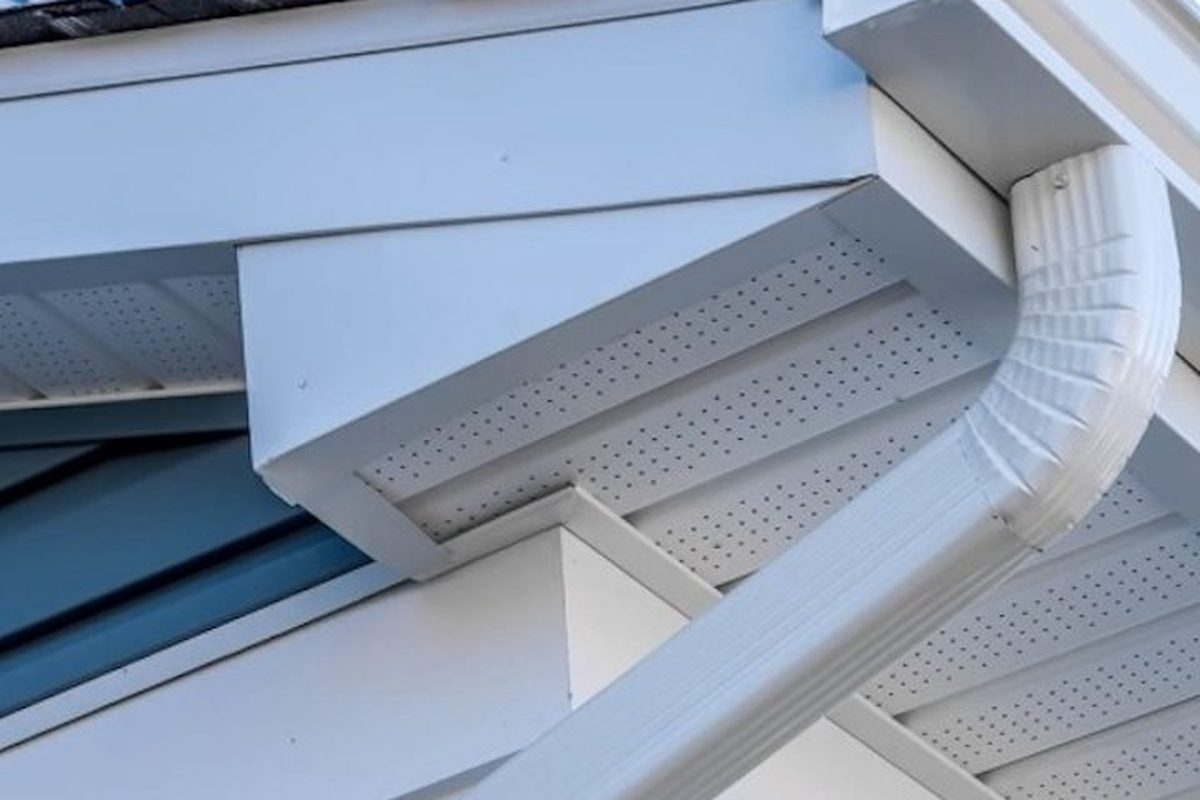
From the driveway you see two things: the flat band along the roof edge, which is the fascia, and the underside of the overhang, which is the soffit. Behind them is more than most people expect.
The rafter tails stick out past the wall. On many houses a sub-fascia board is nailed across their ends, and the finished fascia goes over that. The soffit panels sit in a channel along the wall and a lip at the fascia. Above all of it, the drip edge hangs over the top of the fascia, and the gutter fastens to the face.
Every one of those pieces can be the reason the eave is in trouble. Replacing the visible board without looking at the rest is how the same spot rots again in three years.
Signs the eave needs attention
Paint peeling or blistering on wood fascia, especially right below a gutter seam or a downspout outlet. A gutter that has started to lean out or pull away. Soffit panels that sag, rattle in the wind or have dropped out of their channel. Dark streaks running down the face of the fascia. Wasps going in and out of the same corner every afternoon.
Any one of those is worth a closer look. Push on a wood fascia with a screwdriver. If the tip sinks in, the board is soft, and the rot is almost always longer than the spot you found.
Aluminum wrap can hide rot
Across the metro, a lot of houses have wood fascia covered in bent aluminum coil. It looks clean and never needs paint. The catch is that the wood under it can stay wet for years without anyone seeing it.
Water that gets behind the wrap, from a gutter overflow, a missing drip edge or a loose seam, has nowhere to dry out. We've pulled wrap off fascia that looked perfect from the yard and found the board crumbling in our hands. A sagging gutter or a soft spot under your hand is often the first clue. When we open wrapped fascia, we replace the wet wood before new wrap goes back on.
Where the water at the eave comes from
Fascia rarely rots on its own. Something keeps putting water on it.
A missing or short drip edge lets water roll off the shingles and down the back of the gutter onto the board. Gutters that are clogged, pitched the wrong way or too small for the roof send water over the back edge in heavy rain. Winter ice dams push meltwater up under the first rows of shingles and into the eave. On some houses the shingles barely overhang the edge at all, so water runs straight onto the wood.
If we replace the fascia and leave the cause, you've paid for wood that will rot again. The scope will name the cause and include fixing it, whether that's new drip edge, a gutter reset or a ventilation change.
Squirrels, birds and wasps
A gap in the soffit is an open door. Squirrels chew at soft fascia corners, birds nest behind loose panels, and wasps build inside the overhang. Once an animal is in, it usually ends up in the attic.
Before we close anything up, the animals need to be out. Sealing one in creates a bigger problem. If there's activity, we'll tell you so you can have it handled first. Then we replace the damaged panels and wood and make sure the corners and returns are closed tight.
Patch the bad section or redo the run
Rot is often local, around one downspout or one valley outlet, and a sound repair can be just that section of board and the panels below it. Wood fascia splices in cleanly and can be painted to match.
Vinyl and aluminum are harder. Colors fade, and profiles change over the years, so a new panel next to a twenty-year-old one can stand out. If a match isn't available, we'll show you what the closest option looks like before you decide whether to patch a section or redo that whole side of the house.
Where the panels are solid and the attic needs more intake air, this is also the moment to switch to vented panel. Our attic ventilation page explains how intake and exhaust have to balance.
Frequently asked
How do I tell if my fascia board is rotted?
Can you replace fascia without taking the gutters off?
Why does the fascia keep rotting in the same spot?
Should I wrap my wood fascia in aluminum?
Do you fix soffit damaged by animals?
Related Kansas City roofing pages
- Siding, Soffit and Fascia in Kansas City
- Gutters and Downspouts in Kansas City
- Attic and Roof Ventilation in Kansas City
- Gutter Guards in Kansas City
- Ice Dams in Kansas City
Areas we serve on both sides of the state line
Soft Fascia or Sagging Soffit? Get It Checked
Free, no obligation, and we hand you the photographs either way.
Fix the rot and the reason it rotted
We look at the eave, the drip edge and the gutter together and put the cause in writing along with the repair.