
Kansas City metro · John Beal Roofing since 1947
Black Streaks, Algae and Moss on Kansas City Roofs
Dark stripes running down a shaded slope look alarming from the driveway. Usually they're a cosmetic problem, and the answer isn't a new roof.
What the streaks actually are
The stains begin as small dark spots and spread down the slope as rain carries the growth along the path water takes. The organism is a cyanobacterium that most people call roof algae. It builds a dark coating to protect itself from sunlight, which is why the streaks look black instead of green.
It travels through the air from roof to roof, so once a few houses on a street have it, the neighbors tend to follow. North-facing slopes, roofs under trees and spots that stay damp longest after rain get it first.
Does algae damage shingles?
In most cases, not much. The growth sits on the surface. Over many years it may hold enough moisture to age the granule surface a bit faster, but it doesn't crack shingles or cause leaks by itself.
The real costs are appearance and heat. Streaks make a light roof look dirty, and some owners notice it when they go to sell. A darker surface also soaks up a little more sun.
We'll be straight with you. A roof with streaks and nothing else wrong doesn't need replacing. If someone knocks on your door and calls the streaks storm damage, treat that as a red flag. Our storm chaser warning lists what else to watch for.
Moss and lichen are a different problem
Moss is a plant with root-like anchors. It grows thick in the gaps between shingle tabs and along the bottom edges, where it holds water like a sponge. As it spreads, it can lift a shingle edge, break the sealant bond and let wind-driven rain underneath. In winter the water it holds freezes and expands.
Lichen shows up as flat, crusty gray-green patches that grip the surface hard. Pulling it off usually takes granules with it.
Across the metro, moss is less common than in wetter climates, but we find it on heavily shaded roofs, under overhanging oaks and maples, and on low-pitch sections that drain slowly. Once moss has lifted shingles, the fix is cleaning plus repair of the courses it disturbed.
Cleaning without hurting the roof
Don't pressure wash a shingle roof. High pressure strips granules, and granules are what shield the asphalt from sunlight. Losing them takes years off the roof, and shingle manufacturers warn against it.
The accepted method is a low-pressure application of a cleaner made for roofs, left to work, then rinsed gently. Many of these cleaners are chlorine based, so plants below need to be wetted down and covered. Moss should be loosened and brushed downslope, never scraped upward against the shingle laps.
Climbing up to do this yourself is a fall risk, especially on a wet, slick slope. If you hire it out, ask what product and pressure they use and whether your shingle manufacturer allows it.
Keeping it from coming back
Trimming branches back so the roof gets sun and dries faster helps more than anything else. Clearing leaf piles out of valleys and gutters cuts down on damp spots too.
Strips of zinc or copper installed near the ridge release metal ions when it rains, which slows regrowth on the slope below. They work best close to the strip and less well far down a long slope.
Replacing the roof anyway? Ask about algae-resistant shingles. Several manufacturers make lines with copper-bearing granules mixed in, and many carry a separate limited warranty against algae staining. Read that term, because it's often shorter than the shingle warranty. Our shingle replacement page covers the lines we install.
Streaks or real wear?
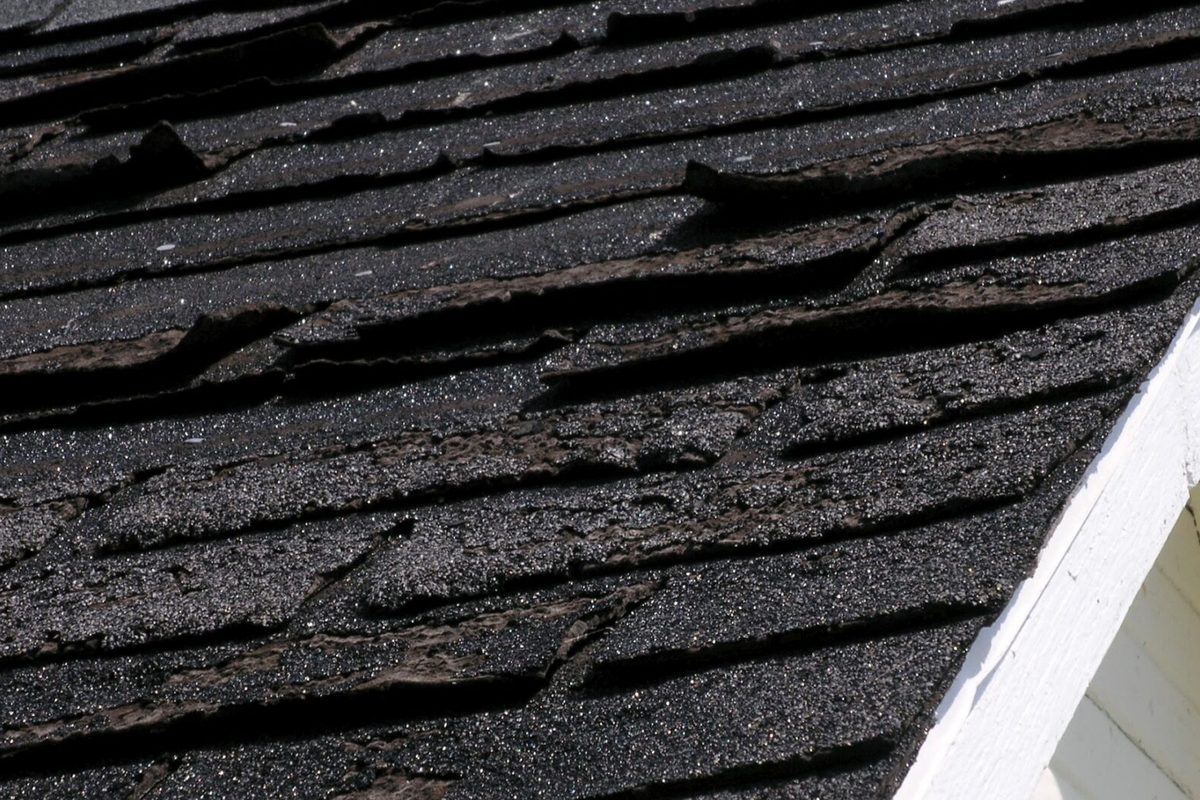
Black streaks can hide, or be mistaken for, problems that do matter: bare spots where granules are gone, hail bruising, blistering, or curling tabs like the shingles in the photo at the top of this page. From the ground they all just look dark. A free roof inspection sorts out which is which, with photos you keep. Call 816-572-9500 any time, day or night.
Roof algae and moss questions
Are the black streaks on my roof mold?
Will algae make my roof leak?
Can I pressure wash the streaks off?
Does homeowners insurance cover roof algae or moss?
Do copper or zinc strips really work?
Related Kansas City roofing pages
- Free Roof Inspection in Kansas City
- Shingle Replacement in Kansas City
- Roof Replacement in Kansas City
- Storm Chaser Warning for Kansas City Homeowners
- Roof Inspections for Home Buyers and Sellers
- Pipe Boot and Roof Vent Leak Repair
Areas we serve on both sides of the state line
Ask whether your roof stains matter
Send us the address. We'll check the streaks up close and tell you plainly what they are.
Find out whether those streaks matter
A free look at the roof, photos you keep, and a plain answer on whether it's cosmetic or something more.