
Kansas City metro · John Beal Roofing since 1947
Getting a Kansas City Roof Ready for Spring Storm Season
The work that pays off is done in February and March, before the first line of storms comes up out of the southwest.
What spring actually does to a roof here
Two forces, and they behave nothing alike. Wind works on edges: the rakes, the eaves, the ridge, and any shingle whose adhesive strip has released. Once one tab lifts, the next storm gets under it and peels a course. That is why wind damage tends to show up in strips rather than scattered spots.
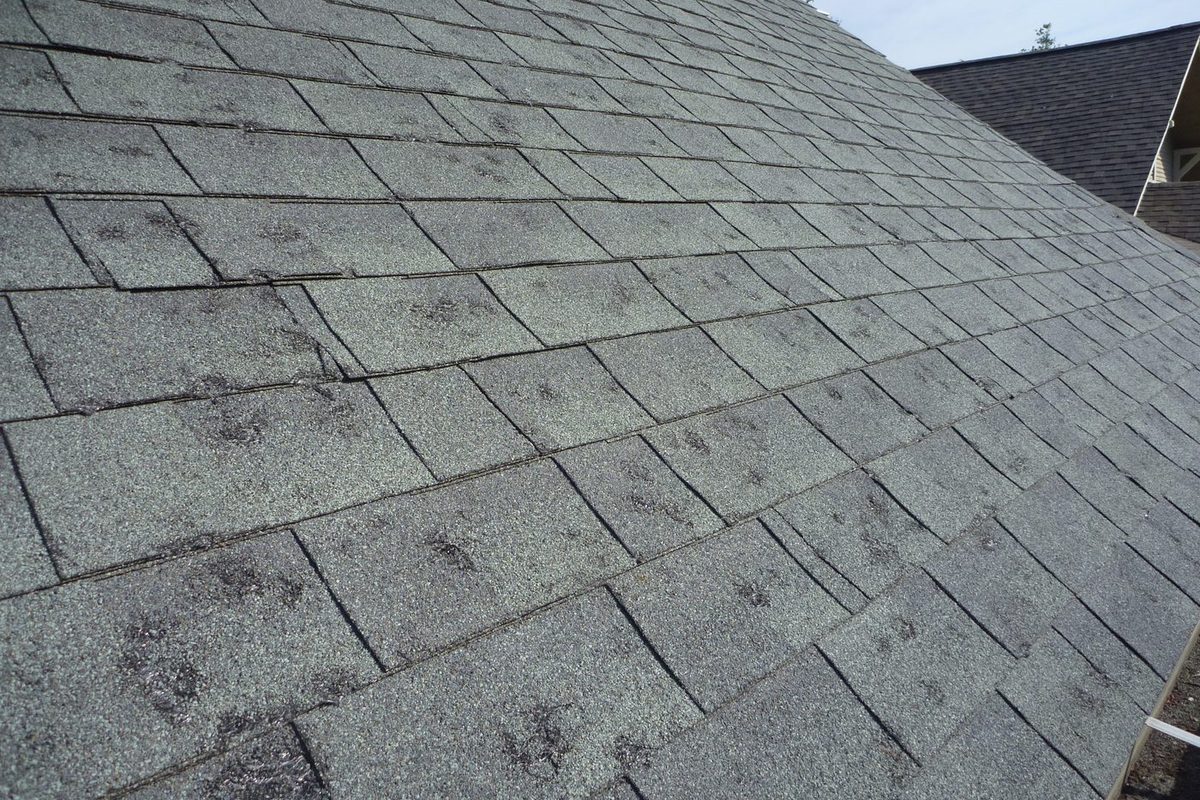
Hail is an impact problem. A stone does not usually punch a hole. It fractures the asphalt mat under the granules, and those granules are what shield the asphalt from the sun. A bruised shingle can look almost normal from the driveway and still have lost years of life. It is felt more than seen, which is why a real inspection means someone on the roof and not someone squinting from the yard.
The third force is just volume of water. A Kansas City spring drops a lot of rain in a short window, and a roof that drains slowly gives water time to find the places it is not supposed to be. Clogged valleys, a gutter running over behind a downspout, ponding at a low-slope section over a porch.
The six things worth checking before the first hail
One: pipe boots. The rubber collar around a plumbing vent is the shortest-lived thing on most roofs and it cracks from UV long before the shingles wear out. Two: sealant bond. A shingle that lifts with light hand pressure is one that will not survive a sixty-mile-an-hour gust. Three: flashing at walls, chimneys and skylights, especially any place where somebody has used caulk as a substitute for metal.
Four: gutters and downspouts, cleared and draining away from the foundation. Five: tree limbs. Late winter is the right time, while you can see the structure of the tree and nothing is leafed out. Anything touching or overhanging the roof gets cut back, because limbs abrade shingles in wind and they are the main way a storm turns into a hole.
Six: the attic. Take a flashlight up on a bright day and look for daylight at penetrations and for old water staining on the underside of the deck. Staining that is dry tells you something leaked once. Staining that is damp tells you something is leaking now, and it is far cheaper to deal with in March.
Photograph the roof while it is undamaged
This is the single most useful thing a homeowner can do and it costs nothing. Get clear, dated photos of each slope, the gutters, the screens, any painted metal, and the air conditioner fins. You are not trying to make an insurance case. You are establishing what the property looked like before.
When a claim comes up later, the question that stalls things is almost always whether damage predates the storm. A folder of dated photos answers it without an argument. Take them from the ground with a zoom rather than climbing anything.
On a free pre-season inspection we do this part for you. Our photos go on the roof itself, up close, and you keep the set whether you hire us or not. Plenty of those inspections end with us telling a homeowner the roof is fine and to call us again in a couple of years.
What we do on a pre-season inspection
We walk the slopes where it is safe to walk them. We lift shingles by hand at the rakes and the field to test whether the sealant strip is still holding. We check every penetration, pull on the flashing, look at the valley metal, and look at the ridge and any exposed fasteners.
Then we go in the attic if there is access, because that is where you find out whether a past leak was repaired or just covered. We also check the ventilation balance, since an attic that runs hot cooks a shingle from below and leaves it more brittle when hail arrives.
You get photographs, a plain list of what we found, and a written scope if something needs doing. If the fix is a handful of pipe boots and a few tubes of the right sealant, we will tell you that and price it that way. We are not going to sell you a roof in March that you do not need.
The morning after a storm
Start from the ground. Walk the yard and look for shingle granules washed into the driveway, pieces of asphalt shingle in the grass, dents in gutter aprons and downspouts, torn window screens, and dings on the air conditioner. Those soft-metal dents are the best hail evidence on the property because they are easy to see and hard to argue with.
Inside, check ceilings and the attic. If water is coming in, get a bucket under it and call us; we run emergency tarping around the clock and a tarp is a lot cheaper than a week of soaked drywall. Do not climb up to look. Wet shingles and loose granules are as slick as anything you will stand on.
Then be careful about who knocks on your door that week. Storms bring out-of-town crews into this metro every spring. Two things we want you to know about how we work: we do not negotiate your insurance claim on your behalf, and we do not absorb, cover or eat deductibles. Anyone offering either of those is telling you something about how they do business.
Frequently asked
When is hail season in the Kansas City area?
How long before a storm should I have the roof checked?
Can I just have somebody seal the shingles down?
Does a pre-season inspection help an insurance claim later?
Do you charge for storm-prep inspections?
Related Kansas City roofing pages
Pre-Season Roof Inspection in Kansas City
Free, no obligation, and we hand you the photographs either way.
Get the roof looked at before the first hail, not after
Free inspection, dated photographs you keep on file, and a written scope for anything that needs attention. No cost if the roof is in good shape.