
Kansas City metro · John Beal Roofing since 1947
Roof Decking Replacement in Kansas City
Decking is the wood your shingles are nailed into. Nobody sees it until the old roof comes off, so the estimate has to cover it before work starts.
What decking does for the shingles
Shingles are only as secure as the nails holding them, and the nails are only as secure as the wood they go into. Manufacturers spell out how far a roofing nail has to penetrate the deck. When the wood is soft, split or too thin, the nail doesn't hold, wind gets under the shingle, and the warranty position gets shaky.
The deck also carries foot traffic during installation and snow load in winter. A sheet that flexes between rafters shows up later as a dip in the roofline you can see from the street.
Planks, plywood and OSB
Climb into the attic of a house built before plywood became standard and you'll often see boards running across the rafters instead of sheets. Some sit tight together. Others have gaps of an inch or more, left over from when the house wore wood shakes that needed air under them.
Tight planks in good shape can take a new shingle roof. Spaced boards can't, because a nail that lands in a gap holds nothing. The usual fix is new sheathing laid over the boards so the whole deck is solid. That adds material and labor, and it belongs in the scope before the job, not as news on install day.
Newer homes have plywood or oriented strand board. Plywood is cross-laminated veneer and handles getting wet and drying out a little better. OSB is pressed wood strands and resin. It's the more common sheet on new construction and does fine when it stays dry, but once water soaks into the edges it can swell and stay swollen. Both are acceptable decking. Thickness, fastening and keeping the wood dry matter more than which one you have.
Why soft spots happen
Rot rarely starts in the middle of a sheet. It starts where water has been getting in for a while: below a failed pipe boot, along a valley, at the eaves where ice dams back water up, or around a chimney with old flashing. A slow leak can soak the wood for years before it ever stains a ceiling.
The other cause comes from inside the house. An attic short on intake at the soffits or exhaust at the ridge holds warm, damp air through the winter. That moisture condenses on the cold underside of the deck. Over a few seasons the sheathing darkens, the plies separate and the nails rust. New wood can go in, but if the ventilation stays the same the new sheets face the same conditions. Our ventilation page explains how intake and exhaust get balanced.
What we can tell before tear-off, and what we can't
From the attic we can spot dark staining, delaminated plies, sagging between rafters and daylight where there shouldn't be any. On the roof, a spongy feel underfoot is a strong hint. Those findings go into the inspection photos.
Even so, nobody can see the top face of the deck until the shingles are off. A sheet can look fine from below and be rotted on top where the leak was. That's the honest limit of any pre-job inspection, and it's why the estimate needs a per-sheet number.
How per-sheet decking pricing should work
A decking line on a written scope should give an installed price per 4x8 sheet and say what thickness goes back down. When the crew finds bad wood, they photograph it before replacing it. You see the count and the pictures, and the final invoice matches the photos.
Ask any contractor how they count sheets and whether you'll see the wood before it goes in the trailer. A vague line reading decking as needed, with no unit price, is the one to question. We don't recommend new decking where the old decking is sound, and on plenty of newer homes the count comes back zero.
Full redeck or a few sheets
Most jobs need a handful of sheets, not a whole new deck. A full redeck makes sense over spaced planks, over sheathing that has delaminated across large areas from long-term attic moisture, or where the existing deck is thinner than the shingle manufacturer allows. The tradeoff is cost against a flat, uniform base. When both options are reasonable, we'll show you what we found and price both.
Code requirements differ between Kansas City, Missouri and the Kansas cities across the line, and some jurisdictions look at sheathing during inspection. Our permits guide covers how that works here.
Decking after a storm or a fallen limb
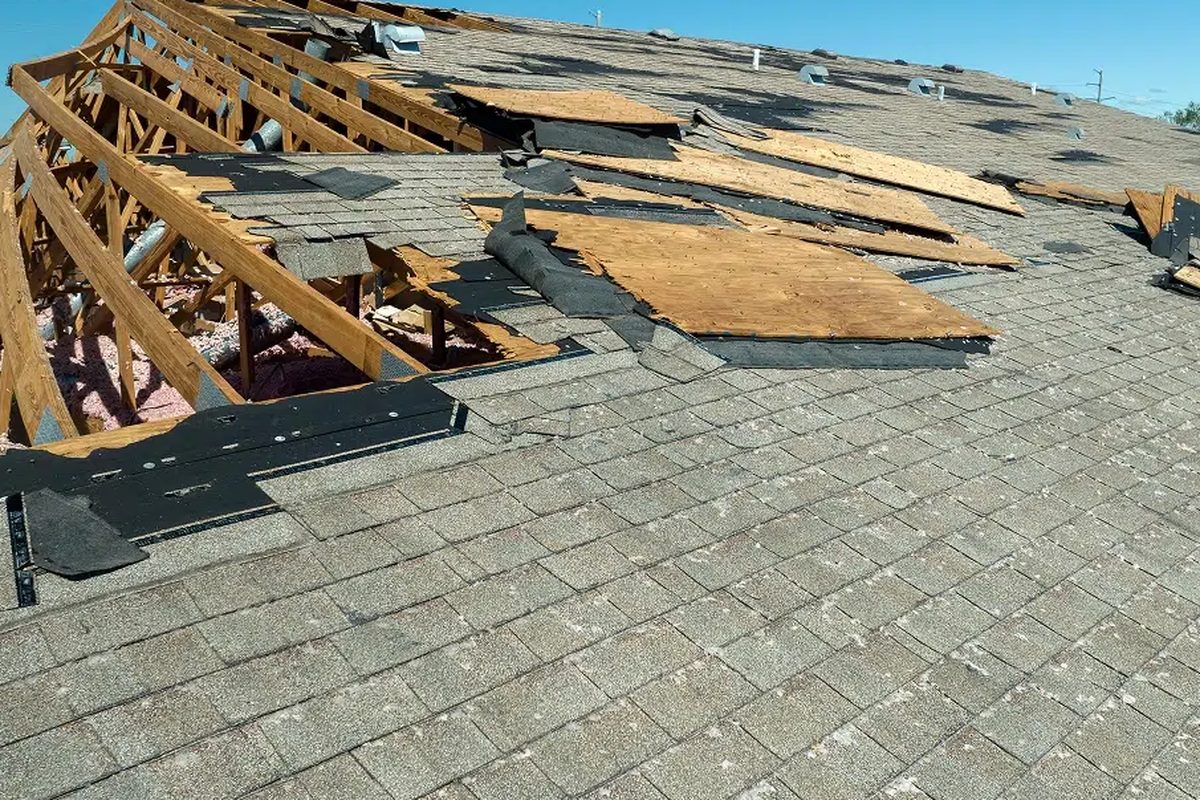
A limb through the roof, or wind that peels a section open, usually breaks or soaks the wood underneath. That decking gets replaced before anything goes back on top. If water is coming in, call 816-572-9500 at any hour and we'll tarp the opening until the repair can be made.
Roof decking questions
How can I tell if my roof decking is bad?
Can new shingles go over plank decking?
Is OSB or plywood better for a roof deck?
Why is decking priced separately from the roof?
Will insurance pay for new decking?
Related Kansas City roofing pages
- Roof Replacement in Kansas City
- Roof Repair in Kansas City
- Storm and Hail Damage Roof Repair in Kansas City
- Attic and Roof Ventilation in Kansas City
- Roof Inspections for Home Buyers and Sellers
- Pipe Boot and Roof Vent Leak Repair
Areas we serve on both sides of the state line
Get a decking check with your roof estimate
We look from the attic and the roof, then put a per-sheet price in writing.
Ask for a per-sheet decking price in writing
Free inspection, attic photos, and a scope that spells out exactly how decking gets counted and charged.