
Kansas City metro · John Beal Roofing since 1947
Roof Overlay vs Full Tear-Off: Which One Fits Your House
Putting new shingles over old ones costs less on day one. Here's what you give up, and when it isn't allowed at all.
What an overlay actually is
On an overlay, the crew leaves the old shingles where they are and nails a new layer through them into the deck. Ridge caps get pulled and replaced, and sometimes the drip edge. Most everything else stays: the old shingles, the old felt, and often the old flashing, either bent flat and covered or left in place with new shingles trimmed around it.
The appeal is easy to see. Tear-off is labor, and disposal is billed by weight. Skipping both takes a real piece out of the price, and the job goes faster. On paper the house has a new roof.
When code rules it out
Cities across the metro adopt some edition of the International Residential Code, each with its own amendments. Under its reroofing rules, a new layer isn't allowed if the roof already has two or more layers, if the existing roof or deck is water-soaked or deteriorated to the point it won't hold a new covering, or over wood shakes and a few other materials. Plenty of older Kansas City houses already carry two layers from an earlier layover, and that settles the question before it starts.
Your city's building department has the final say on its own amendments. We check the rule for your address when we pull the permit. Our permits guide explains how that works across the state line.
What you can't see under the old layer
The deck is the part an overlay hides. On a tear-off, every sheet of plywood or every plank gets looked at. Soft spots around old pipe boots, delamination from attic moisture, gaps in board decking: they get found and fixed while the roof is open.
With an overlay, nobody sees any of it. New nails go into whatever happens to be under there. If a sheet is rotted, the nails don't hold, and the shingles over it can lift in the next big wind. Our decking page goes into how we find and price bad sheets once the roof is off.
Flashing and the ice barrier
Flashing is the second problem. Step flashing at walls and the metal around chimneys can't be replaced right without removing the shingles woven into it. On an overlay it's usually left alone and covered. Pipe boots get a new collar slipped over the old one, or get sealed. That leaves the most leak-prone parts of the roof the same age as the roof you were trying to replace.
Ice-and-water membrane does its job by sticking to the deck and sealing around every nail driven through it. Laid over old shingles, it can't bond to a smooth surface and can't seal nail holes the same way. In a Kansas City winter, with ice building at the eaves, that membrane is what keeps meltwater from backing up under the shingles. Our underlayment page explains where it belongs.
Weight, looks and lifespan
A second layer of asphalt shingles adds a few hundred pounds per square, and a square is 100 square feet. Framing built to code generally handles one extra layer. Older houses with undersized rafters, or a ridge that already sags, are another story, and that's part of why the code caps it.
The new layer takes the shape of the old one. Curled or cupped shingles underneath telegraph through, especially with thinner shingles. Architectural shingles hide more of it, but not all. Two layers also hold more heat, and the top layer sits on an uneven base. Shingle manufacturers set their own terms for installs over an existing layer, so read the warranty before choosing one.
When an overlay is a reasonable choice
We won't pretend it's never the right call. One layer of flat, well-bonded shingles on a solid deck can take an overlay without much risk, say on a detached garage, or on a house you plan to sell in a couple of years. Some owners decide the savings are worth the tradeoffs. That's their decision.
What we ask is that it be made with the facts in front of you. If we price both, the estimate will spell out what's being kept, what's being covered, and what we couldn't inspect.
Why we tear off
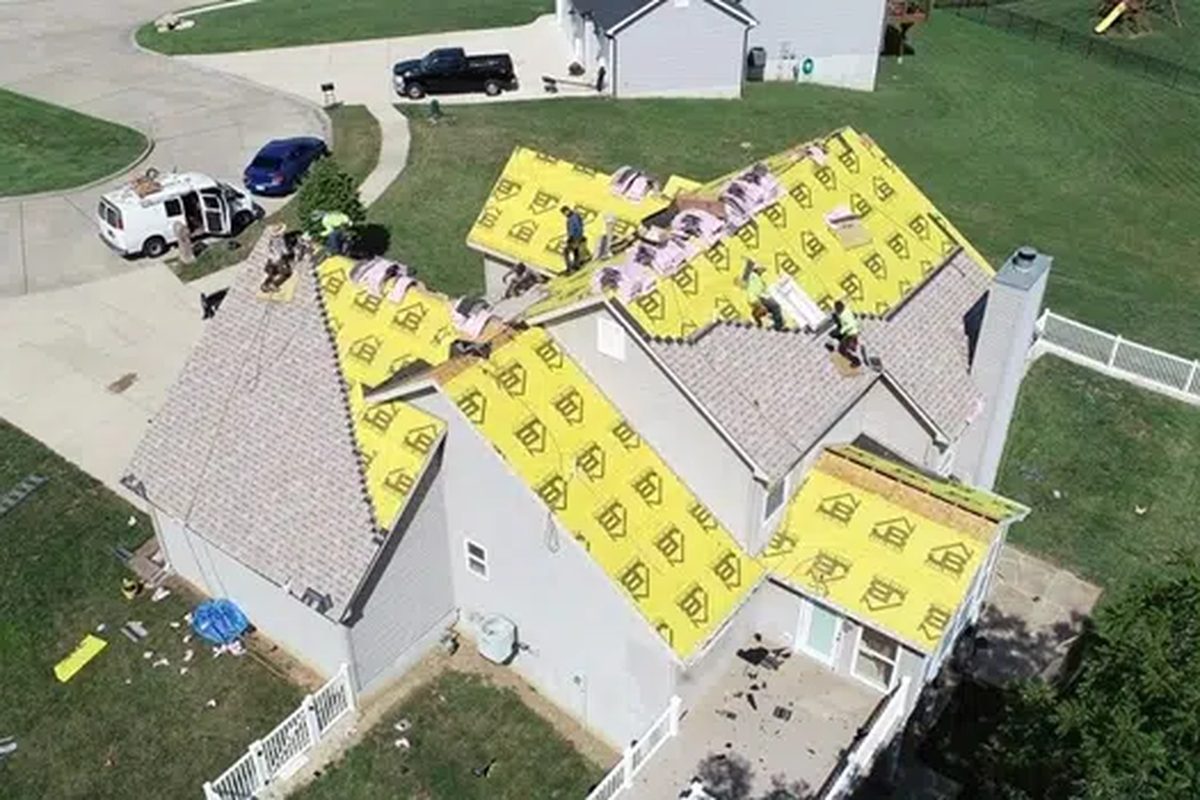
On our replacements, the old roof comes down to the deck. Bad sheets are replaced at the per-sheet price written in the estimate. New ice-and-water membrane goes on the bare deck at the eaves and valleys, new step flashing at every wall, new pipe boots, and the ventilation gets corrected while the roof is open. Every roof we install carries John Beal Roofing's lifetime workmanship warranty.
It costs more than a layover. The difference buys a roof where every layer is new and every part has been seen. Our roof replacement page lists the full scope, and our ridge vent and box vent page covers the vent decisions that come up during a tear-off.
Tear-off and replacement near you
We price tear-offs and overlays side by side when asked, on both sides of the state line, including in:
Frequently asked
Is a roof overlay allowed in Kansas City?
How much does an overlay save?
Can new shingles go over a hail-damaged roof?
How do I tell how many layers my roof has?
Will an overlay look like a new roof?
Related roofing services
Price a tear-off, or both options
Free inspection with a layer count, decking notes and photos, plus a written scope.
Know what is under your shingles before you pick
We count the layers, check the deck from the attic, and write up exactly what each option includes.