
Kansas City metro · John Beal Roofing since 1947
What Size Hail Damages a Roof?
Hail size is a starting point, not a verdict. Here's how size, wind and the age of your shingles work together after a Kansas City storm.
Hail sizes and what they usually do
Storm reports describe hail by comparing it to everyday objects, a scale the National Weather Service uses as well. Pea-size is about a quarter inch. Penny-size is three-quarters of an inch. Quarter-size is one inch, and that's also where the Weather Service draws the line for a severe thunderstorm. Golf-ball hail runs an inch and three-quarters.
Pea to dime-size hail rarely hurts a shingle in good shape. It may strip a few granules and leave marks on soft metal, and that's usually all.
At penny size you start seeing dents in aluminum gutters, downspouts, window screens and the thin caps on box vents. On a shingle roof near the end of its life, it can crack the mat.
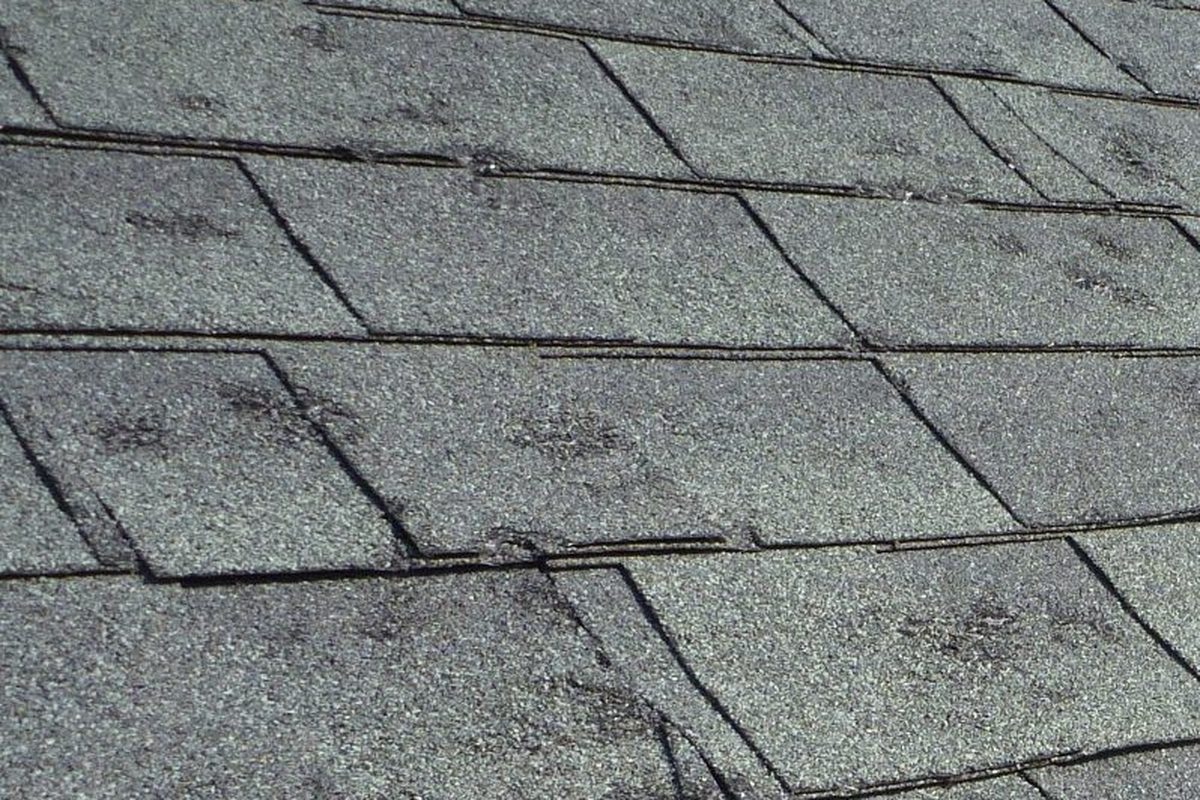
From about an inch up, real damage to asphalt shingles becomes common. That means bruises where the mat has fractured under the granules, granules knocked off down to bare asphalt, and torn or cracked edges. Golf-ball hail and bigger can break through a shingle outright.
Why one storm hits two houses differently
Size is one variable. Wind counts just as much. Hail that falls straight down meets a sloped roof at an angle and glances off. Hail pushed by a strong gust can strike the slope facing the storm almost head-on, which delivers a lot more force. That's why one side of a house can be bruised from top to bottom while the opposite slope looks untouched.
Roof age comes next. A new shingle is flexible, and the asphalt gives a little on impact. After fifteen or twenty Kansas City summers, the oils that keep it pliable have baked out. A stone that bounced off in year two will crack the same shingle in year eighteen.
Shingle type plays a part as well. Three-tab shingles are thinner than architectural ones. Impact-resistant shingles carry a UL 2218 Class 4 rating, meaning a sample took a two-inch steel ball dropped on it without cracking. Class 4 isn't hail-proof. It took more to break in testing.
Hail itself varies too. Hard, dense stones do more than soft, slushy ones the same size, and a radar map can't tell you which kind fell on your street.
Start with the gutters and downspouts
You don't need to climb on the roof for a first read, and you shouldn't. Walk around the house and look at things that dent easily: downspouts, especially the elbows near the ground; gutter faces, viewed from the side with light behind them; the fins on the AC condenser; a mailbox or the lid of a grill.
If those show dents the size of your thumbnail or bigger, have the roof looked at. If the soft metal is clean, the shingles probably are too. Not always, though, because old shingles can crack from hail that barely marks aluminum.
Granules are another clue. A little grit in the gutters is normal shedding on any asphalt roof. A thick layer of it at the splash blocks the morning after a storm isn't.
Telling hail marks from ordinary wear
Plenty of roof marks look like hail and aren't. Blisters pop and leave pits. Foot traffic scuffs granules off. Some shingles come from the factory with uneven patches. On an inspection we look for marks scattered at random across a slope, a pattern that lines up with the direction the storm came from, soft spots that give under thumb pressure where the mat has fractured, and dented metal on the same side of the house. Then we chalk off and photograph a test area so the count isn't a guess. Our hail damage guide shows what those marks look like up close.
Sometimes the answer is that the roof came through fine. We tell you that, and you keep the photos either way.
If the hail was big enough
Hail damage doesn't always leak right away. A bruised shingle can shed water for a season or two while the fractured spot loses granules and the asphalt underneath weathers. Most homeowner policies set a deadline for reporting storm damage, and your policy spells it out. Get the roof inspected while the storm date is still easy to document. Our storm damage page covers the repair side, and a free roof inspection is where it starts.
What we provide is documentation: photos, a test-area count and a written scope. We don't negotiate with your insurance company, and we don't absorb deductibles. The claim is between you and your insurer, and our insurance claim page explains how the process usually runs on both sides of the state line.
Hail inspections across the metro
Storm cells don't stop at city limits. After hail, we inspect homes throughout the area, including these communities:
Frequently asked
Can pea-size hail damage a roof?
Does one-inch hail mean I need a new roof?
Why is only one side of my roof damaged?
Do Class 4 shingles stop hail damage?
Is there a way to tell how big the hail was at my house?
Related storm resources
Find out if the hail hit your roof
We inspect, mark a test area and hand you the photos, damage or not.
Not sure the hail was big enough? We'll check.
A free inspection with photos and a straight answer, including when the answer is that your roof came through fine.