
Kansas City metro · John Beal Roofing since 1947
Tornado and Straight-Line Wind Roof Damage in Kansas City
A tornado and a straight-line wind event hit a roof in different ways. Here is what to check, what to do first, and where a roofer's job stops.
Two kinds of wind, two damage patterns
Most wind damage in this metro doesn't come from a tornado. It comes from the outflow of a strong thunderstorm, which forecasters call a downburst or straight-line wind. That air hits the ground and spreads out in one direction across a whole neighborhood, and the gusts can be as strong as a weak tornado.
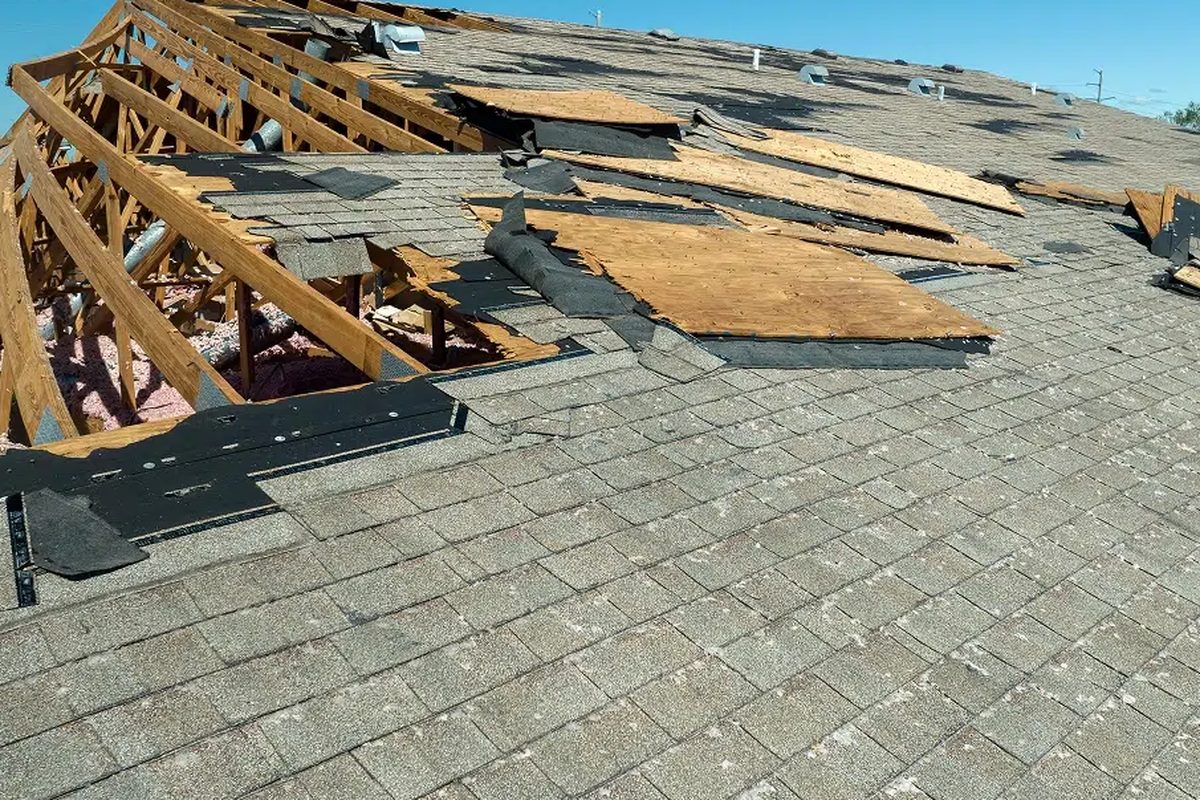
Straight-line damage tends to look orderly. Shingles lift on the side facing the storm, ridge caps peel off, fences and trees go down the same way, and the far slope often looks untouched. Tornado damage is messier. Debris arrives from more than one direction, so we find punctures, gouges, and pieces of somebody else's siding or lumber lying on the roof. The worst of it can be confined to a path a few hundred yards wide, and a house just outside that path may lose only a handful of shingles.
The difference changes how we inspect. After straight-line wind, we start at the windward eaves, rakes and ridge and work inward. After a tornado, every slope gets the same attention, because impact damage doesn't follow a direction.
How wind gets under a shingle
A shingle is held down two ways. Four to six nails go through the nailing strip, and a line of asphalt sealant bonds each course to the one below it once the sun warms it. Wind moving across a roof creates suction on the top surface. That suction is strongest at the edges, the corners and the ridge, which is why damage starts there and spreads.
Once a tab's seal lets go, each gust lifts it a little higher and works the nails above it. The tab can settle back down and look normal from the yard while the fasteners have backed partway out. So after a big wind we hand-check tabs on the windward side instead of judging from the ground. If a tab lifts freely with light finger pressure, the bond is gone even though the shingle is still there.
The first few hours after the storm
Don't climb onto the roof. After a tornado or a severe wind event the decking may be cracked, rafters may be broken, and loose shingles slide underfoot. Before you walk around outside, look for downed power lines near the house and check for the smell of gas.
Inside, move furniture and electronics away from any drip and set out buckets. A ceiling that is bulging with water can come down without warning. Take pictures of the outside of the house, the inside damage and any debris in the yard before anything gets cleaned up or hauled away.
Then call us. Our line is answered live around the clock at 816-572-9500, and on the Kansas side at 913-281-6000. We tarp open sections to keep more water out and photograph what we find, so you have a record before temporary covers hide it. Our emergency roof repair page explains how tarping works.
When the damage goes past the roofing
A roofer can tell you a lot about what's going on above your ceiling, but some tornado damage is structural. Cracked rafters, a roof that has shifted on top of the walls, a gable end pushed out of plumb, or a chimney that has moved all mean the framing took the load. When we see that, we'll say so plainly and recommend that a structural engineer or framing contractor look at it before new roofing goes on. Shingles laid over a frame that's out of line only hide the problem. Most houses we see after wind events don't fall in that group, and an inspection is how you find out which one you're in.
Fix the damaged areas or reroof?
On a roof that was in good shape before the storm, wind damage is often a repair. We replace missing and creased shingles, hand-seal lifted tabs that are still pliable, and replace the ridge cap. Matching color and profile is the hard part on an older roof, so we'll set a sample next to your existing shingles before anyone commits to it.
A full replacement makes more sense when damage is spread across several slopes, when a large share of tabs have lost their seal, or when the shingles are so brittle that lifting one to make a repair cracks the ones around it. A roof peppered with flying debris usually ends up here too. Our repair or replace guide lays out how we weigh it.
Your policy, your deductible, our photos
Most standard homeowners policies list windstorm as a covered peril. Many policies in this region also carry a separate wind and hail deductible, and some figure it as a percentage of the home's insured value instead of a flat dollar amount. Look at your declarations page now so that number isn't a surprise later.
Our part is the record: dated photos, measurements, and a written scope of what needs to be fixed. If you want us on the roof when the adjuster comes, we'll be there. We don't negotiate claims, and we don't waive or absorb deductibles. The deductible is part of your agreement with your insurer. For the step-by-step, read our guides to filing a roof claim in Missouri and filing in Kansas.
After a big storm, out-of-town crews start knocking on doors across the metro within days. Before you sign anything, confirm a local address and a phone number that a person answers. Our storm chaser warning covers what to look for.
Wind damage inspections around the metro
We inspect wind and tornado damage on both sides of the state line.
Frequently asked
How can I tell whether it was a tornado or straight-line wind?
Is it safe to stay in the house with a wind-damaged roof?
How soon can you tarp my roof?
Will insurance pay for wind damage to my roof?
Can wind damage show up weeks after the storm?
Related storm and wind services
Request a wind or tornado damage inspection
Tell us when the storm came through and what you are seeing. We will photograph every slope.
Get the open spots covered, then get the full picture
Around-the-clock tarping, a photo record of the whole roof, and a written scope before any repair starts.